Angry-Bird-3D
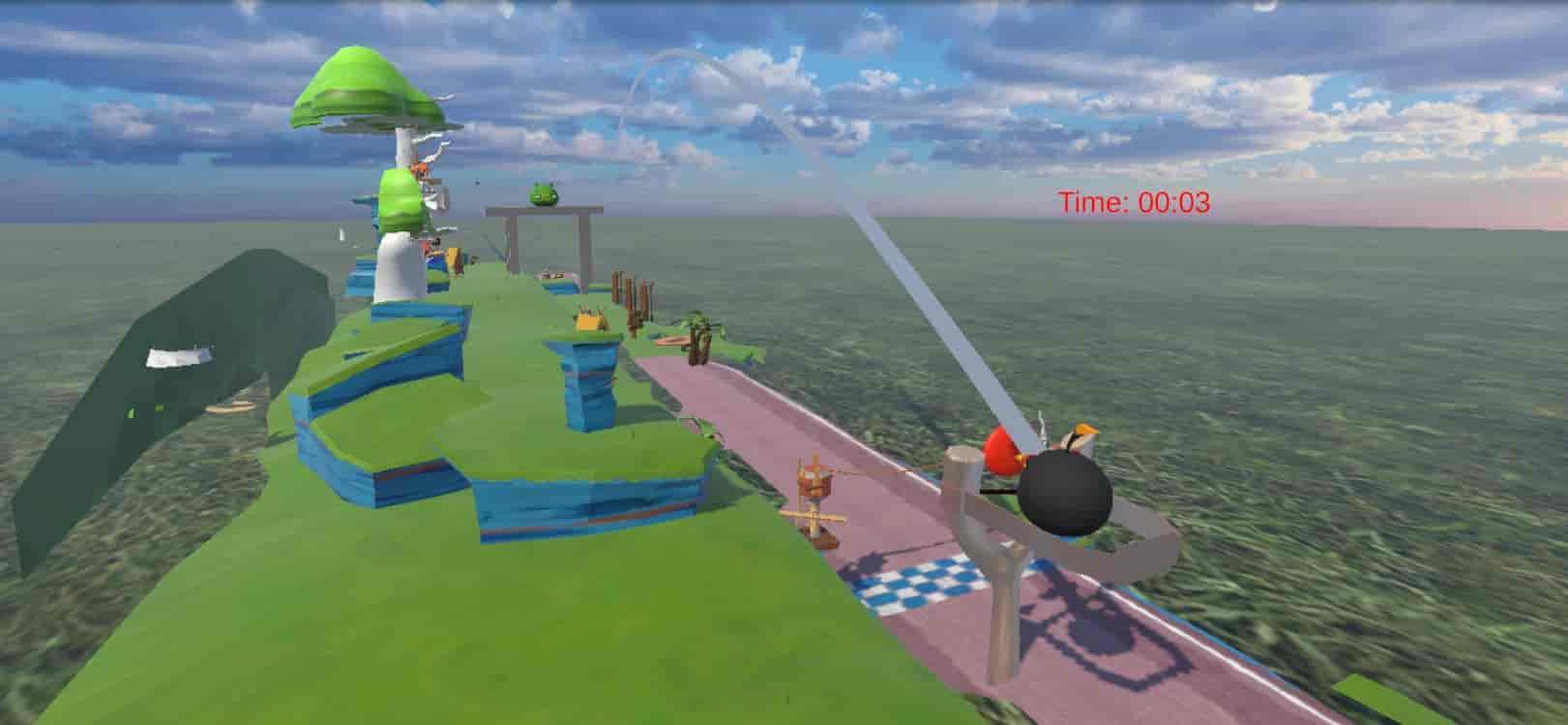
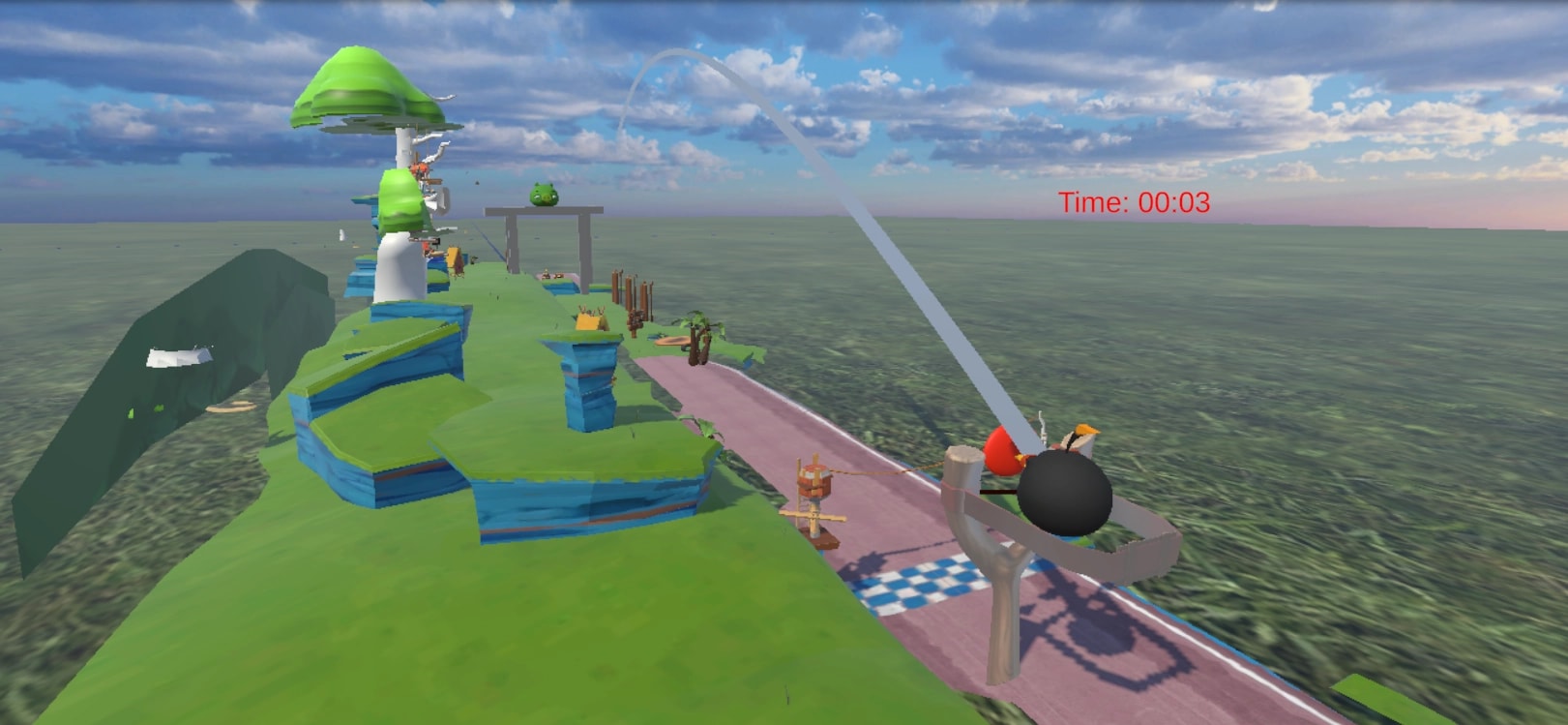
Physics-based 3D slingshot game built in Unity and playable in the browser via WebGL.
Problem
The slingshot formula is easy to clone in 2D and surprisingly deep in 3D: aiming gains a whole axis, structures collapse in ways you can't hand-script, and the camera has to keep a fast projectile, the target, and the destruction all readable at once. The goal was a physics-driven 3D take on the classic, playable instantly in a browser with no install, straight from a Unity WebGL build.
Architecture
Drag input feeds a slingshot controller that converts pull distance and direction into a launch impulse. From release onward, everything is Unity's rigidbody simulation: the projectile, the destructible structures, and the chain reactions between them. None of it is scripted. A follow camera tracks the projectile through flight and pulls back to frame the impact.
Tech decisions & trade-offs
Why real physics over scripted destruction
Pre-animated collapses look fine exactly once. Building structures from individual rigidbody blocks with mass and joints means every hit resolves differently (clipping a tower's leg topples it sideways, a center mass hit punches through), and replayability comes free. The trade-off is control: a physics solver can't be art-directed, so level design becomes an iteration loop of placing blocks, launching, and tuning masses until structures fail in interesting ways.
Why WebGL as the shipping target
A download link filters out almost everyone; a browser link doesn't. Exporting to WebGL puts the game one click away (hosted on Unity Play), at the cost of WebGL's constraints: single-threaded execution, compressed memory budgets, and slower load than native. Respecting that budget shaped the content: low-poly geometry, shared materials to keep draw calls down, and restrained physics object counts per level.
Why a follow camera instead of a fixed frame
In 3D the projectile travels toward depth, and a static camera turns the flight into a shrinking dot. The camera eases along the launch trajectory and then orbits toward the impact point, keeping both the arc and the destruction readable. The cost is camera-tuning time (clip-through avoidance and smoothing curves), which is invisible work, but its absence is what makes 3D fan games feel broken.